Disaster Preparedness Network Nepal (DPNet Nepal) hereby invites applications and nominations from eligible individuals and institutions for the Disaster Management Awards to be conferred in the year 2082 (2026).
1. Nepal Disaster Management Distinguished Award: This award will be conferred on one individual or institution in recognition of long-term and outstanding contributions in the field of disaster management.
2. Nepal Disaster Management Life Saver Award: This award will be conferred on one individual or institution in recognition of exceptional contributions made to saving lives during disasters.
3. Innovative Disaster Management Technology Award: This award will be conferred on one individual or institution for their contribution to the development and promotion of innovative technologies in disaster management.
Documents to be Attached with the Application Form
Applicants must submit published works related to disaster management, details of contributions made in their respective fields, and supporting personal or institutional information along with one recommendation letter that can assist in the evaluation process.
Rules for Recommendation
A recommender may recommend only one individual or institution for one award category. Applications must be submitted to the Network no later than Magh 5, 2082 (19 January 2026). Applications and nominations received after the deadline or not meeting the required criteria will not be considered. The application form can be obtained from the Network’s website: https://dpnet.org.np/news
Criteria for Selection of Individuals and Institutions to be Honored
For the Nepal Disaster Management Award, priority shall be given to individuals and institutions based on the following criteria:
(a) Individuals and institutions that have been continuously active for a long time in the field of disaster management through governmental or non-governmental organizations, at the local level, and within communities.
(b) Individuals and institutions that have made outstanding contributions to saving lives immediately during disaster events.
(c) Individuals and institutions that have created or invented innovative methods and technologies in the areas of disaster risk reduction, preparedness, response, recovery, rehabilitation, and reconstruction.
(d) Individuals and institutions that have contributed to public awareness enhancement through creative and innovative work in the field of disaster management.
(e) Individuals and institutions that have contributed to disaster management by promoting and utilizing local resources and means, as well as local and traditional knowledge, methods, skills, and technologies.
(f) Individuals and institutions that have contributed at the national and international levels in the field of disaster risk reduction and management, thereby enhancing the country’s reputation.
(g) Individuals and institutions that have made notable contributions to capacity building, promotion of volunteerism, and coordination in disaster management, including media organizations, journalists, or volunteers.
Submission of Applications
Applications may be submitted to the Network’s office by filling up the Google Form: https://forms.gle/Birw89cwJWGYC6Q3A ,
post, courier, or in person, or sent by email to dpnet@dpnet.org.np with the subject line “DPNet-Award”.
Application Form: Google Drive Link
For further information, please contact the Network during office hours at Phone No.: +977-1-5672165.
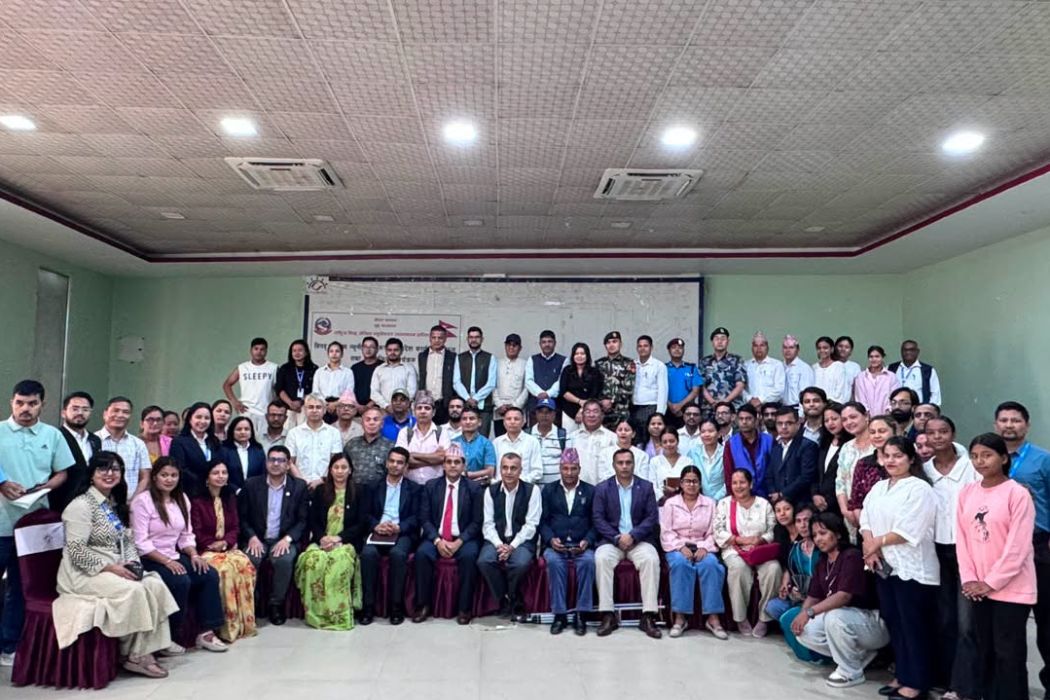
Kathmandu, 14 October 2025, The National Disaster Risk Reduction and Management Authority (NDRRMA) successfully organized the 4th National Conference on Disaster Risk Reduction (NCDRR 2025) on 13–14 October 2025 at ICIMOD, Kathmandu, in collaboration with the National Platform for Disaster Risk Reduction (NPDRR), DPNet Nepal, and ICIMOD.
Held under the global theme “Fund Resilience, Not Disasters,” the conference was organized to mark the International Day for Disaster Risk Reduction (IDDRR) and served as a national platform for dialogue, learning, and collaboration on strengthening Nepal’s disaster and climate resilience.
The two-day conference brought together government representatives, national and international experts, development partners, civil society, academia, and the private sector to exchange experiences, innovations, and policy perspectives on disaster risk reduction (DRR) and climate adaptation.
Key discussions throughout the conference emphasized:
The opening ceremony was graced by Hon. Home Minister Mr. Om Prakash Aryal, who underscored the importance of proactive investment in disaster preparedness and risk-informed development. The closing ceremony was presided over by Hon. Minister Mr. Kulman Ghising, Minister for Energy, Water Resources and Irrigation; Physical Infrastructure and Transport; and Urban Development, who highlighted the need for collective action and sustained investment to reduce disaster losses.
Over the course of the conference, participants engaged in 7 technical sessions and 24 ignite-stage presentations, with insights shared by 61 presenters and panelists. The event witnessed the participation of more than 250 delegates from across the country and beyond.
The conference reaffirmed Nepal’s commitment to advancing the Sendai Framework for Disaster Risk Reduction, strengthening anticipatory action, and fostering inclusive, technology-enabled, and well-financed pathways toward a more resilient future.
Bangkok, December 10 2025, DPNet participated in the Annual General Meeting (AGM) of the Asia Disaster Reduction and Response Network (ADRRN), held in Bangkok alongside the Regional Humanitarian Partnership Week (RHPW 2025). The AGM served as a key annual platform for ADRRN members to review organizational strategy, plan disaster resilience initiatives, and elect leadership.
The 2025 AGM brought together humanitarian actors from across the Asia-Pacific region to share knowledge, strengthen partnerships, and advance collective humanitarian efforts. Discussions this year focused on critical themes such as localization of aid, building community resilience, and implementing the Kathmandu Covenant—a charter designed to empower local leaders and transform humanitarian assistance into an act of solidarity rather than charity.
DPNet’s participation highlighted its ongoing commitment to promoting local leadership, enhancing coordination, and contributing to regional strategies that make disaster response more effective, accountable, and sustainable. The AGM reaffirmed the importance of collaboration among civil society organizations and local actors to address the growing challenges posed by climate shocks, resource constraints, and complex emergencies in the region.
As part of the broader RHPW 2025 program, the ADRRN AGM emphasized actionable strategies for localized humanitarian action, providing members with opportunities to share experiences, explore innovative approaches, and strengthen networks across Asia-Pacific communities.
Bangkok, December 10, 2025 - The Asian Disaster Reduction and Response Network (ADRRN), Community World Service Asia (CWSA), the International Council of Voluntary Agencies (ICVA), and the United Nations Office for the Coordination of Humanitarian Affairs (UNOCHA) co-organised this year’s RHPW under the theme Beyond Emergencies: Reframing Humanitarianism for a Changing World. The event brought together 517 aid practitioners, from 279 organisations and 38 countries, representing the civil society, governments, UN agencies, private sector partners, academics, and crisis-affected community leaders from across Asia and the Pacific.
DPNet participated in the Regional Humanitarian Partnership Week (RHPW) Asia Pacific 2025, held from December 8–10, under the theme “Reframing Humanitarianism for a Changing World.” The event brought together members of the Asian Disaster Reduction and Response Network (ADRRN) and partners from across the Asia-Pacific region to discuss innovative approaches to humanitarian action in a rapidly changing world.
Amid a year marked by shrinking resources, climate shocks, and overlapping crises, RHPW 2025 focused on what the humanitarian sector can do differently. Key discussions addressed shifting power and resources to local actors, connecting climate and humanitarian responses, rethinking financing models, and using data and technology responsibly to make aid more effective and accountable.
DPNet’s presentation, “The Kathmandu Covenant in Action: Localisation for Solidarity and Agency,” highlighted the growing role of local leaders in transforming humanitarian aid. The session unveiled the Kathmandu Covenant, a bold charter forged by Asia-Pacific civil society leaders in Kathmandu to drive systemic change.
The session explored whether the future of aid is truly local, emphasizing strategies for reclaiming agency and turning humanitarian assistance into acts of solidarity rather than charity. DPNet Nepal shared insights on strengthening national coordination and accountability, highlighting the importance of South-to-South cooperation in empowering local communities to lead and shape humanitarian responses.
Attendees were invited to actively engage in the movement, which promotes unified action and collaboration among local actors across the region. The workshop demonstrated that localized leadership, accountability, and solidarity are essential for creating a more resilient and equitable humanitarian sector.
RHPW 2025 underscored the need for innovative approaches, partnerships, and local empowerment as the humanitarian sector navigates complex crises, reinforcing that the future of aid lies in the hands of local communities and leaders.
Kathmandu, October 7, 2025 — A preparatory meeting for the upcoming International Day for Disaster Risk Reduction (IDDRR) and the 4th National Conference on Disaster Risk Reduction (NCDRR) was successfully held through the Zoom Meeting. Dr. Raju Thapa facilitated the meeting which brought together key representatives, including Mr. Dinesh Bhatta, Executive Chief of the National Disaster Risk Reduction and Management Authority (NDRRMA); Mr. Ram Bahadur KC, Spokesperson of NDRRMA; as well as DPNet Advisors, Technical Advisors, and partner representatives.
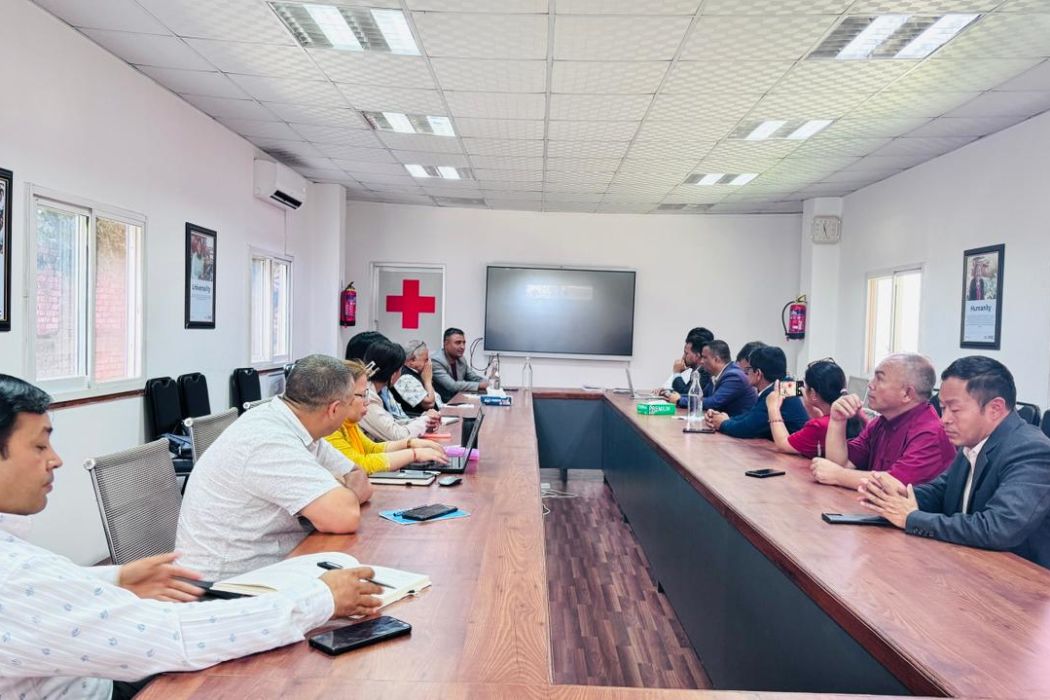
Kathmandu, October 6 – The Disaster Preparedness Network Nepal (DPNet), in collaboration with the Nepal Red Cross Society (NRCS) and the NGO Federation of Nepal, organized a virtual coordination meeting to review the impacts of recent heavy monsoon rains and assess immediate needs in the most affected areas, particularly Rautahat and Ilam districts. The session was facilitated by Dr. Raju Thapa, Chairperson of DPNet Nepal, and attended by around 100 participants representing various government agencies, humanitarian partners, and civil society organizations. The discussion aimed to consolidate field updates, identify priority needs, and strengthen coordination for an effective monsoon response.